Raw or cooked?
Extra virgin olive oil can be eaten raw, simply with bread or as a dressing for salads and vegetables, or used for cooking.
Raw
Raw, it keeps all the aromas and flavours of the olives and its minor components. It seasons, lifts and brings out the natural flavours of food. It can be added on its own, or as the main ingredient of sauces, to cold or warm salads, or just after cooking white fish, pasta and vegetables.
A vinaigrette should add flavour and bring out that of the food, not bury it under the taste of the seasonings. To make one, follow this order: salt, vinegar, lemon, spices and herbs, and extra virgin olive oil last of all. The oil forms a thin, sealing film around the dressed food, which stops the other seasonings from penetrating it and spoiling its flavour.
Gentle cooking
Most of the properties of extra virgin olive oil are also preserved in stews, casseroles, braises, broths and stocks, provided they cook slowly at low temperature (60 to 70 °C), as well as when shellfish are quickly pan-cooked (1 to 3 minutes).
High-heat cooking
For pan-frying, roasting or cooking over a wood fire, extra virgin olive oil is the most stable vegetable fat and does not produce toxic reactions until it reaches high temperatures.
It is also suitable for deep-frying. Because it forms a thin, strong coating around the food, it holds in the food's juices and flavours and stops it from soaking up the oil. That is why it does not pass its own taste on to food but rather brings out the food's own flavours.
The three flavour types
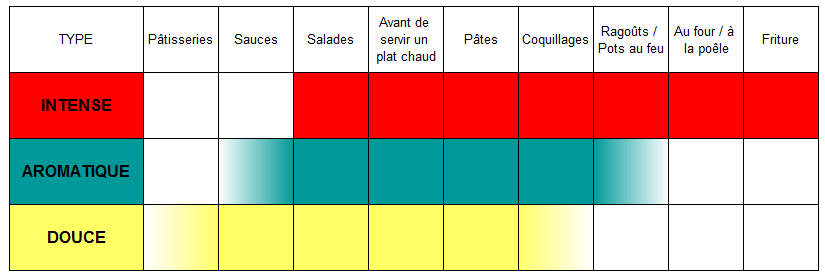
 Intense oils
For lovers of strongly flavoured olive oils. These oils keep their sensory and health-giving properties longer thanks to their high antioxidant content, especially polyphenols and vitamin E.
Flavour: always fruity, but more balanced, smooth and very aromatic, with notes of green apple and green almond.
Uses: ideal for dressing salads and finishing countless hot dishes, adding aroma and bringing out each ingredient. They are particularly good for finishing white fish baked in the oven or en papillote, and for very short cooking: shellfish, or vegetables or pasta tossed in the pan before serving.
 Aromatic oils
They add aroma and bring out the flavours of food.
Flavour: lighter and softer in the mouth, with delicate aromas, slightly sweet, with notes of banana, almond or freshly cut grass.
Uses: their soft, rounded aromas are well suited to dressing salads made with mild ingredients, and to sauces that don't suit the intense flavour of fresh olives, bitterness or pungency. Many cooks now use them instead of refined oils or oils with less flavour and fewer beneficial components (sunflower, rapeseed, groundnut…) for mayonnaise, gribiche, tartare and even marinière sauces.
 Mild oils
They enhance the taste of delicate food without overwhelming it.
Flavour: light and soft in the mouth, with delicate aromas, slightly sweet, with notes of green almond and cut grass.
Uses: ideal for people not used to extra virgin olive oils. Their soft, rounded aromas are very well suited to salads and above all to sauces that don't suit the intense flavour of fresh olives, bitterness or pungency (gribiche, mayonnaise, tartare…). They are also used in baking and for cooking rice.
A few recipes
Here are a few typical recipes using extra virgin olive oil, which illustrate the Mediterranean diet and let you appreciate the different flavour types. Difficulty is rated from 1 to 5, and the pictogram shows the type of oil used. The recipes are in French.
| Recipe | Difficulty | Type of oil |
|---|---|---|
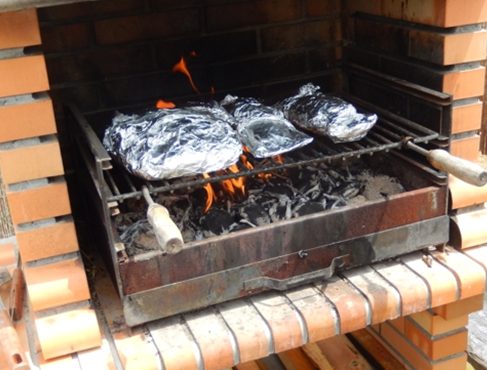 Sea bass en papillote |   | |
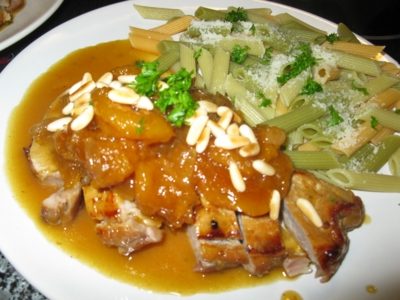 Iberian pork tenderloin | | |
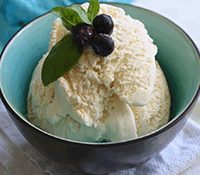 Olive oil ice cream | | |