When to harvest? Veraison, the crucial moment
Olives are harvested from late October to early April. Dates vary slightly by variety and location. The ideal time is veraison, when the olives start to "turn", that is, to change colour. This mostly happens between late October and early December.
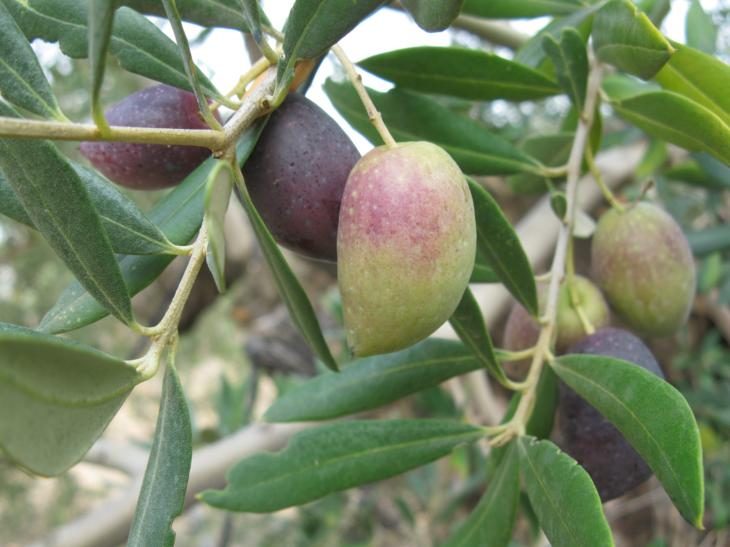
Polyphenol concentration is then at its peak. From that point it keeps falling, more or less quickly depending on the variety. Milling the olives quickly and storing the oil away from air, light and heat delay the inevitable oxidation of the polyphenols. Ripe, black, soft olives picked up from the ground after March contain almost none.
How to harvest? Pick without bruising
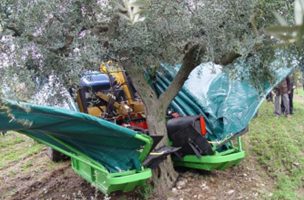
For the best quality, olives must be handled extremely gently and milled as quickly as possible to limit oxidation. To avoid contact with the ground, bacterial contamination and bruising of the skin, pickers spread a large tarpaulin around the foot of the tree; some use nets.
Traditionally, the branches were beaten with wooden poles, a fast method that damaged the branches and often the olives. The pole has now been usefully replaced by a mechanical shaker placed on the trunk or main branches, which brings down 80 to 90% of the fruit, followed by a kind of rake that finishes the job with gentle combing.
Year-round care
After the harvest, olive trees are often pruned, and the ground around their base weeded and ploughed so they can take up as much water and nutrients as possible. A little fertiliser or manure mixed with straw is then spread.
Buds appear in late April or early May, and flowers towards the end of May. Flowering lasts about a week and is the riskiest period of the year. This is when the fruit sets, then ripens slowly in the summer sun, filling with fatty acids and polyphenols until veraison. Throughout this period, the grower watches over the trees, treats them, anticipates attacks by pests, flies and larvae and, where possible, makes up for any lack of water by irrigating.