From the Phoenicians to the present day
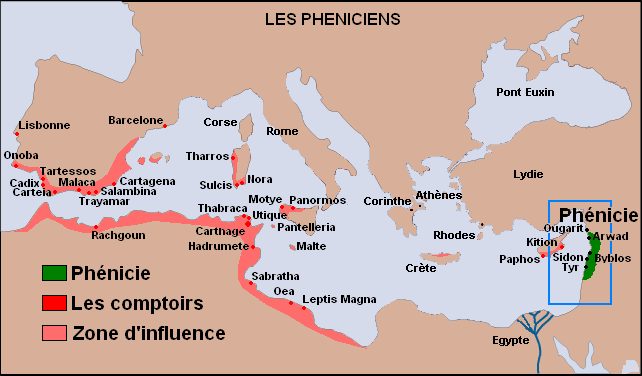
"The liquid gold of the Mediterranean" is thought to have first been produced by the Phoenicians around 4000 BC. The oldest remains have been found in Phoenicia (an area corresponding to the north of present-day Israel, Lebanon and north-western Syria), in Crete and in Egypt.
These travellers, conquerors and merchants spread olive growing along the sunniest shores of the Mare Nostrum. The Greek and Roman civilisations then took over and extended it further inland.
After the fall of the Roman Empire in the 5th century, olive growing declined considerably for a thousand years. It picked up somewhat in the Middle Ages, when the Roman Catholic Church began to make widespread use of olive oil in its rites, particularly anointing. It is worth remembering that the name "Christ" comes from the Greek Khristos, meaning "anointed".
In the 16th century, Spanish conquistadors and missionaries brought the olive tree to the New World, planting it in Mexico, Argentina, California, Peru and elsewhere, where it is still grown, though in relatively limited quantities.
Olive oil made its great comeback in the 19th century, when cultivation expanded considerably alongside the mechanisation of oil extraction. The trend continued in the 20th century, as Tunisia, Morocco, Turkey and Syria also developed olive growing.
Today the Mediterranean basin still accounts for most of the world's production and continues to carry an art of living associated with this precious commodity, which has not yet revealed all its secrets.